Three days to build a real EU application
Summer Studies of Practical European Integration, Chernivtsi, 25–27 August 2026. Built to be lived, not lectured.
Every session leads to one deliverable
Over three days, students moved from understanding Ukraine’s accession to building, as a team, a complete EU funding application, linked to a real EU instrument and to an accession-related challenge.
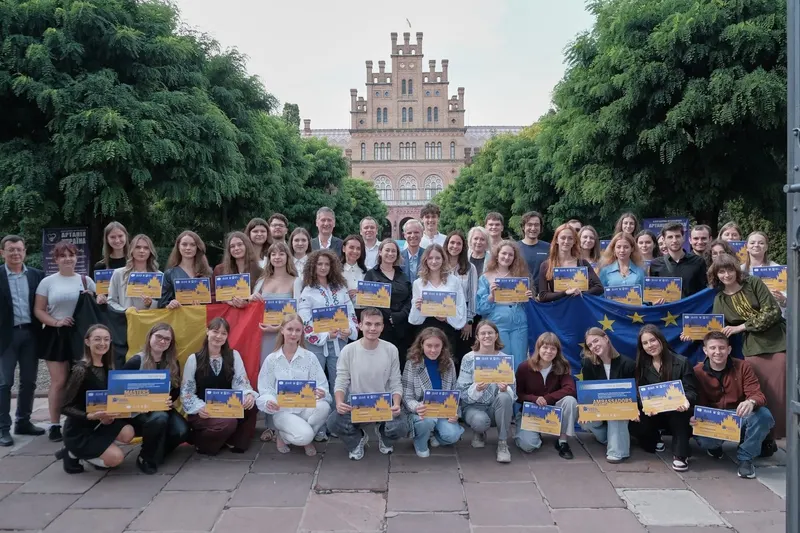
Hosted by Yuriy Fedkovych Chernivtsi National University, with students from Bukovinian State Medical University, who brought a strong health-sector perspective to the teams.

Three days, one deliverable
Understanding Europe
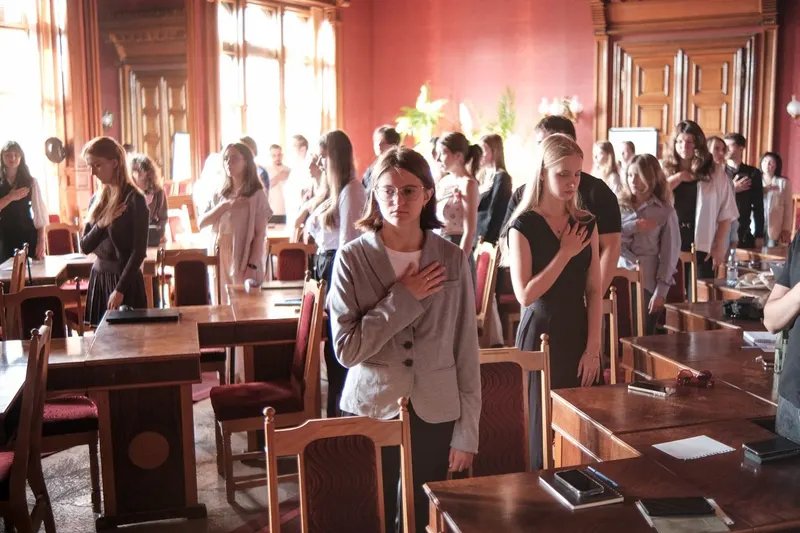
- Opening, video message from Herman Van Rompuy, first permanent President of the European Council
- Keynote: Europe and Ukraine, where we are now
- The EU economic landscape: single market, trade and investment
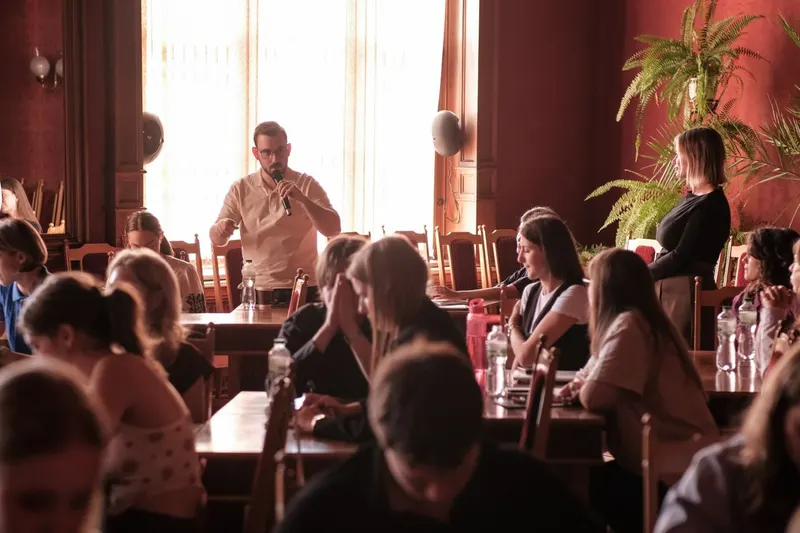
- Panel: what European integration will change for young Ukrainians
- Simulation game “The Crisis Council”: a hybrid attack on an EU member state
- Team formation
Europe for the economy, entrepreneurs and citizens
- Teamwork: research and first draft of the project
- Q&A with the trainers
- Overview of 12 key EU funding instruments
- Final project development and pitch preparation
From project to application
- Team presentations, feedback from trainers and jury
- Jury deliberation
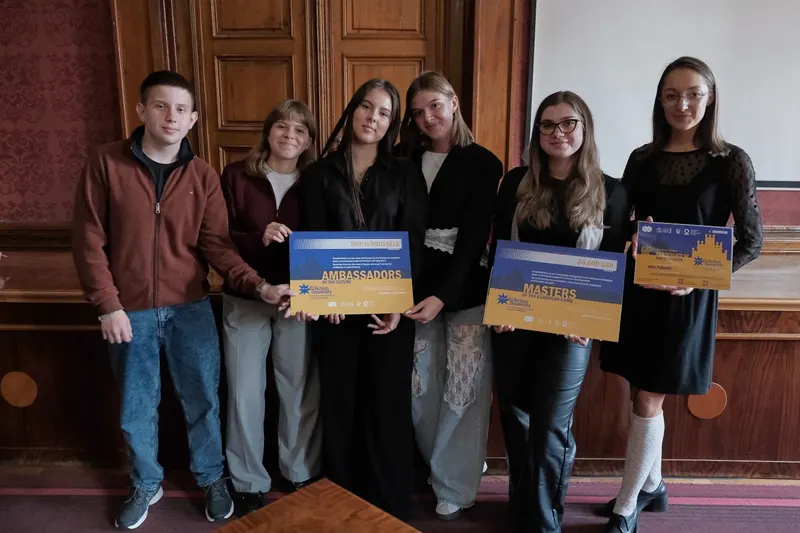
- Funding Fair: results announced by the independent jury
- Closing ceremony, certificates and group photo
Three blocks, one Student Handbook
All three blocks are gathered in a 31-page companion workbook given to every participant. Teams use it as their menu of funding instruments and project archetypes.
EU standards × business
20 EU norms Ukraine will adopt, and how to turn compliance into a business. 10 replicable business models.
EU programmes × cities
25 EU funding instruments already open to Ukrainian cities and communities. 10 replicable project models.
EU enlargement × young founders
14 enlargement dynamics turned into 12 entrepreneurial archetypes for founders under 30.
A cohort of future European professionals
Selection is open to Bachelor’s and Master’s students at partner universities with at least B2 English. Priority goes to students from frontline and war-affected regions, first-time applicants to international programmes, interdisciplinary teams, and women in STEM and defence technology.
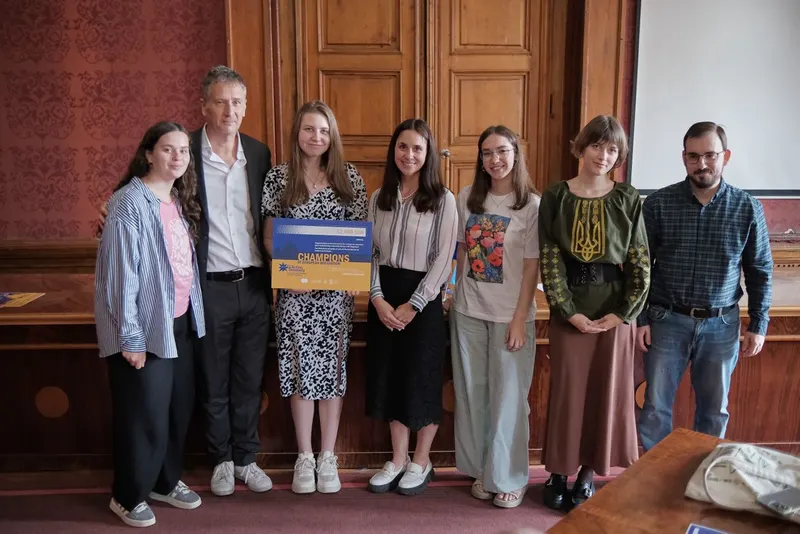
Nine teams, an independent jury, three winners
Each team of five to eight students chose one EU funding instrument and one project archetype, and built a 15-section application file. The jury scored relevance, design quality, feasibility, and sustainability and impact, each out of 10, then heard the pitch.
- Ukraine Education 2040 Cash prize
From learning for grades to learning for life - ComplyEU Cash prize and mentoring track
EU market access for Ukrainian food producers - The Greeners Study visit to Brussels, 5–11 November 2026
Mykolaiv Green Inclusive Living District
Four findings from the first edition
Honesty pays
The four teams that openly stated the limits of their projects obtained the four highest scores, including all three winners.
Defend it in the room
A good file must also be defensible face to face. Two winners won on the strength of their pitch and their readiness to act on a real deadline.
Feasibility is the hard part
Four of nine files did not name a specific call with budget and deadline; seven described partnerships as intended rather than secured.
Indicators need discipline
Only four teams gave a baseline, a target and a source for every indicator, as the EU template requires.
The next edition starts in your university
Registration for the next Summer University will open through the Europe Officers of our partner universities. Follow us to be the first to know.